Description
“The director is the only person who knows what the film is about.” — Satyajit Ray 🎬
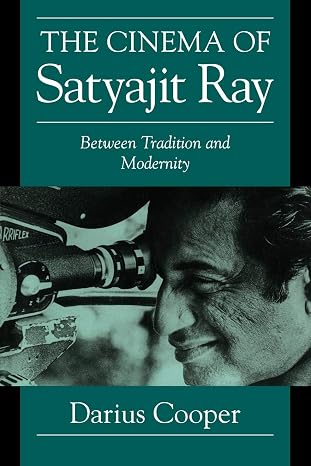
Satyajit Ray is universally celebrated as India’s greatest filmmaker, an auteur whose profound, humanistic vision placed Indian cinema firmly on the global map. While he was often hailed in the West as a gentle purveyor of emotional depth, that singular narrative barely scratched the surface of his ideological brilliance. How did this master storyteller navigate the immense collisions between tradition and modernity? The Cinema of Satyajit Ray: Between Tradition and Modernity by Darius Cooper is the first study to peel back these layers, examining his rich and varied oeuvre through a rigorous social, historical, and aesthetic lens.
Unlike standard biographies, Cooper’s deeply researched book situates Ray’s films within classical Indian aesthetics—specifically the concept of Rasa (wonder, intuition, and suggestion)—while simultaneously outlining the distinct Western and modernist influences on his work. Cooper provides brilliant, meticulous analyses of masterpieces like The Apu Trilogy, The Chess Players (Shatranj Ke Khilari), and Jalsaghar (The Music Room). He proves that Ray was not just an observer of humanity, but a sharp, ideological artist who relentlessly attacked the hypocrisy of the Bengali middle class.
One of the most fascinating aspects of this book is its exploration of the “Ray Woman” and the “Ray Purush” (Man). Cooper dedicates significant space to how Ray portrayed the plight of women navigating—and often subtly dismantling—deeply entrenched patriarchal structures. Furthermore, the book unpacks Ray’s complex political vision of the ‘doubly colonized’ individual, trapped between the ghosts of British imperialism and the failures of post-independence Indian society.
Considered one of the most comprehensive treatments of Ray’s work ever published, this Cambridge University Press volume makes the sprawling genius of this twentieth-century visionary truly accessible. It is not just a book about movies; it is a profound exploration of India’s cultural evolution over a century of change, viewed through the viewfinder of a master craftsman.
🖋️ About the Author
Darius Cooper is a distinguished academic and author who served as a Professor in the English Department at San Diego Mesa College. Holding deep expertise in both literature and film studies, Cooper brings a rigorous, dual-lens approach to cinematic criticism. His ability to seamlessly blend classical Indian aesthetic theory (like Rasa) with modern film criticism has made this book a staple in university cinema studies worldwide.
🎯 Who Needs to Read This?
Cinephiles & Film Students: Anyone studying auteur theory, world cinema, or the technical and narrative construction of Satyajit Ray’s masterpieces.
Feminist & Cultural Scholars: Readers fascinated by the portrayal of women’s liberation, patriarchy, and the “doubly colonized” identity in post-independence India.
Lovers of Deep-Dive Critiques: Those who want to move past basic celebrity biographies and engage with serious, thought-provoking aesthetic and historical film analysis.
Which Satyajit Ray film left the deepest impact on you? Let’s discuss his cinematic legacy in the comments! 👇
#SatyajitRay #DariusCooper #IndianCinema #WorldCinema #ApuTrilogy #FilmStudies #BookstagramIndia #CinemaBooks #BengaliCinema #AuteurTheory #CambridgeUniversityPress #FilmHistory #MustReadBooks
📚 Top Goodreads-Style Comments to Boost Engagement
5 Stars – The definitive academic look at Ray’s genius!
“I have read several biographies of Satyajit Ray, but Darius Cooper’s book is on another level entirely. Instead of just recounting Ray’s life, Cooper actually dissects the films. The chapter on how Ray used classical Indian Rasa theory in The Apu Trilogy and Jalsaghar completely changed how I watch those movies. It is academic and dense, but incredibly rewarding. Essential reading for any true student of cinema.”
4 Stars – A brilliant analysis of the ‘Ray Woman’
“What makes this book stand out is its sociological approach. Cooper’s analysis of the ‘Odyssean Journey of the Ray Woman’ is fantastic. He perfectly captures how Ray depicted women struggling against—and surviving—a strict patriarchal society in films like Charulata and Mahanagar. It reads like a university textbook, so be prepared for a scholarly tone, but it is undoubtedly one of the most important contributions to Indian film studies.”
5 Stars – Finally, Ray is viewed as an ideological filmmaker!
“For decades, Western critics just labeled Ray as a ‘gentle humanist,’ ignoring the sharp political and social critiques in his work. Cooper dismantles that myth brilliantly. The section exploring Ray’s vision of the ‘doubly colonized’ Indian middle-class is eye-opening. This book adds such a vital dimension to our understanding of world cinema. If you love Satyajit Ray, this will give you an entirely new appreciation for his intellect.”
ISBN ; 9789357761369
PAPERBACK