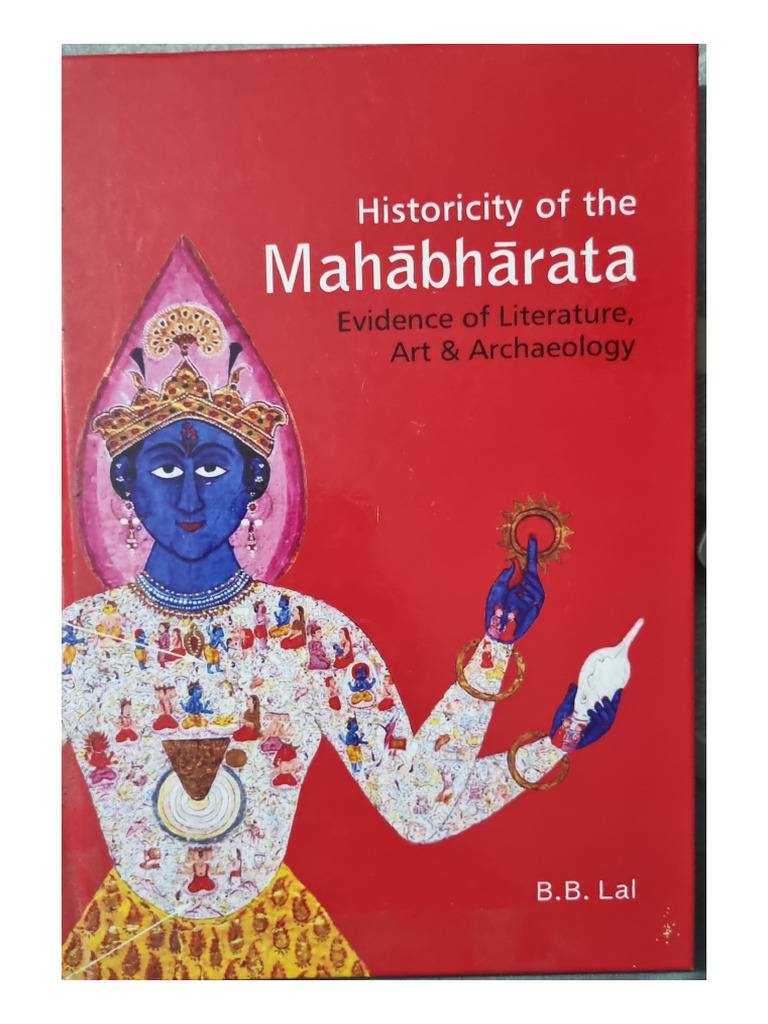
Description
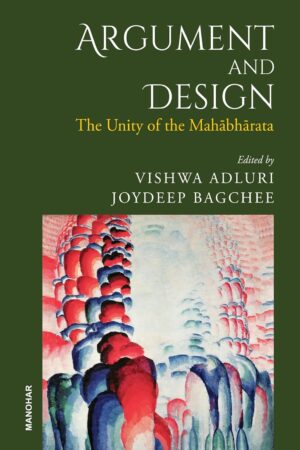
For generations, the Mahabharata has occupied a contested space between profound spiritual devotion and critical skepticism. To the believer, every incident within its verses represents absolute truth, while to the skeptic, the epic is simply an elaborate work of fiction. Determining where myth ends and reality begins has long seemed impossible, yet modern archaeology offers a scientific bridge. By examining tangible material evidence beneath the earth, this book addresses one of the most enduring debates in South Asian history: does the great epic rest on genuine historical foundations?
Pioneering archaeologist Professor B.B. Lal tackles this question through his landmark excavations at key sites, most notably Hastinapura on the banks of the Ganga. At the lowest occupational levels, excavators uncovered the Painted Grey Ware (PGW) culture, dating to roughly 1100–800 BCE—a distinct layer found consistently across virtually all traditional Mahabharata locations. The archaeological findings revealed that a devastating Ganga flood washed away a substantial portion of this settlement, directly corroborating ancient literary accounts in the Vayu Purana that recount how King Nichakshu was forced to abandon flooded Hastinapura and establish a new capital at Kausambi.
Beyond physical excavations, this volume explores the epic’s vast footprint across Indian civilization, literature, epigraphy, and art. The text examines how the traditions of the Mahabharata inspired regional works—including early literary adaptations in Tamil Nadu and Karnataka—as well as numismatic artifacts, ancient pillar inscriptions, and temple iconography across India and Southeast Asia. Concurrently, non-epic textual sources such as the Atharvaveda, the Aitareya Brahmana, Panini’s grammar, and Kautilya’s Arthashastra provide vital contextual evidence supporting a historical core that dates the epic events to around 900 BCE.
Written by an internationally renowned authority who served as the Director General of the Archaeological Survey of India, this handy book arose from discussions at a major international conference on the epic’s antiquity. Lal acknowledges that the Mahabharata expanded eleven-fold across the centuries—growing from an initial 8,800 verses into an encyclopedic 100,000—which introduced numerous interpolations over time. However, as the author argues, one must not throw out the wheat with the chaff; beneath the layered storytelling lies an authentic kernel of historical truth waiting to be understood.