Description
Here is a drafted introduction for the book based on the provided review material.
Introduction: Rethinking the Portuguese Empire
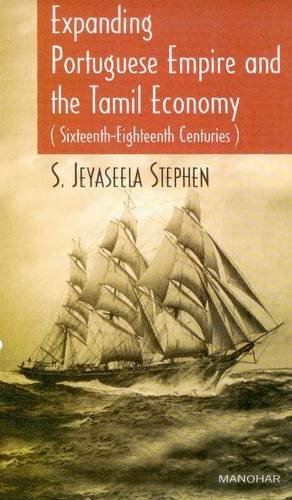
For decades, the narrative of European maritime history in the Indian Ocean has treated the Portuguese as a mere inaugural prologue. Often characterized as a disruptive and ultimately marginal force, they are frequently overshadowed by the later imperial exploits of the British, Dutch, and French. However, Expanding Portuguese Empire and the Tamil Economy (Sixteenth-Eighteenth Centuries) challenges this traditional, often unflattering perspective. In this context, “empire” does not simply mean territorial conquest or unyielding naval dominance; rather, it represents the dynamic, manifold interactions between the Portuguese and the indigenous actors of the Indian Ocean network.
Shifting the historical lens away from the heavily studied Arabian Sea and western seaboard, this work focuses on the Bay of Bengal—specifically the Coromandel Coast and its deep linkages to the Tamil regional economy.
The Dual Trading Zones of the Tamil Coast
Despite being a micro-study of the Tamil coast, the economic landscape was highly varied. The Portuguese divided this spatial unit into two distinct, thriving commercial regions:
Costa da Pescaria (Pearl Fishery Coast): Located in the south, this region was internationally renowned for its lucrative pearl and chank diving industries, where the Portuguese sought to exercise monopolistic control.
Costa da Choromandel (Coromandel Coast): Situated to the north, this zone was the engine of a massive, flourishing trade in bulk commodities, specifically rice and textiles.
Economic Stimulation and Indigenous Collaboration
Far from being solely predatory, Portuguese involvement—increasingly driven by private traders rather than the crown by the seventeenth century—acted as a major catalyst for the regional economy. Their presence linked the Tamil coast to the emerging early modern world economy through several key avenues:
Collaborating with Local Merchants: The Portuguese integrated into existing networks managed by highly experienced indigenous trading communities, such as the Marakkayars and Chettis, beginning as early as 1502.
Supplying Strategic Goods: They became indispensable to shifting local kingdoms by supplying vital military and strategic assets, including horses, elephants, and gunpowder.
Intensifying Production: By compensating for the withdrawal of Chinese long-distance trade and the exclusion of Arab traders, Portuguese demand stimulated the hinterland’s production of textiles and rice for export to Southeast Asia.
Infusing Bullion: The continuous injection of foreign bullion deeply enriched and stimulated the local Tamil economy.
While the Portuguese presence on the Tamil coast was ultimately precarious and impermanent—ending with the fall of San Thome in Mylapore to the British in 1749—their impact on intra-Asian trade was profound and transformative.