The Indus Valley Civilization: Complete Research Bundle
Unearth the profound mysteries of one of the world’s oldest urban cultures with this exclusive master collection. The Current Studies on the Indus Civilization series brings together an unparalleled collaboration of international archaeologists, linguists, and historians, shedding light on the material culture, urbanism, and linguistic diversity of the ancient Indus Valley.
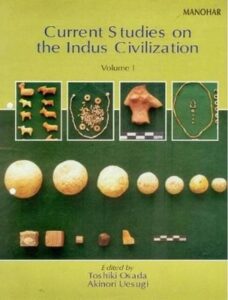
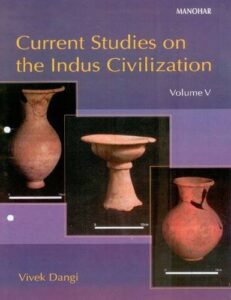
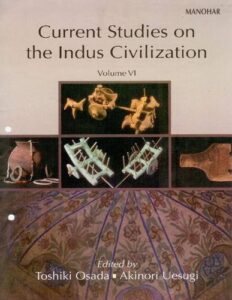
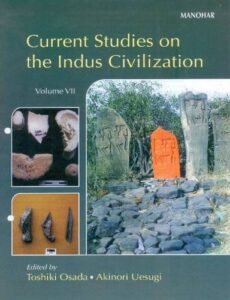
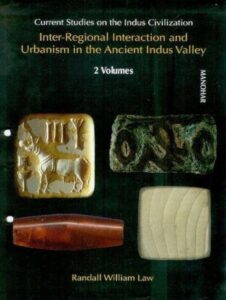
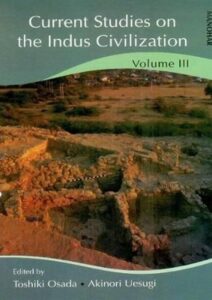
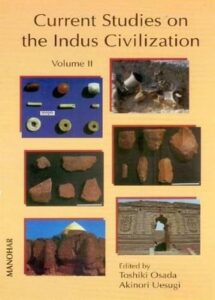
Buy Here: https://grantha.in/product/current-studies-on-the-indus-civilization-book-bundle/
Bundle Highlights:
Volumes 1–4: Features foundational research on early cotton cultivation, South Asian linguistics by Roger Blench, and extensive explorations of the Ghaggar Basin and Sindh region.
Volume 5: Highlights V. Dangi’s meticulous settlement archaeology of the Ghaggar Basin (Haryana), detailing ancient pottery, inscriptions, and regional history.
Volumes 6 & 7: Delivers comprehensive scientific reports on the Kanmer excavations, including faunal remains and ethnoarchaeological studies, edited by Toshiki Osada and Akinori Uesugi.
Volume 8 (Parts 1 & 2): Showcases Dr. Randall William Law’s definitive and highly acclaimed examination of inter-regional interaction and urbanism in the ancient valley.
Volume 9 & Bonus Titles: Explores mythological animal motifs (the unicorn, crocodile, and ass) decoded by Asko Parpola, alongside fascinating independent works like The Magic in the Image: Women in Clay at Mohenjo-daro and Harappa.
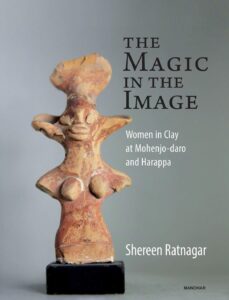
- The Magic in the Image: Women in Clay at Mohenjo-daro and Harappa: Hundreds of clay figurines of women and their fragments, were found in the remains of Harappa and Mohenjo-Daro, major cities of the Indus civilization, but almost none in the other Harappan towns or villages. What could be the explanation. This study begins with the background: the archaeological history, various studies of figurines and how they came to be linked with the idea of the mother goddess. There is also an attempt to draw a general picture of popular religion of the time and to detect archaeological traces of Harappan beliefs and religious practices. There follows an analysis of the figurines themselves: what were their antecedents. Do the few male clay figurines fall in the same genre as the plentiful remains of women’s images. There were youthful women, mothers, portly matrons and also women at the grinding stone, but nothing that could be a representation of ‘womanhood’. Attention is paid to the variation in headgear, hairstyles, ornamentation and the all-pervasive hip-girdles. Nudity is also a topic of discussion. Besides, they cannot be stood upright. As for their distribution, it was significantly irregular. Although attempts to replicate the firing of these solid objects using simple methods failed, it is doubtful to what extent they were made by skilled potters, the modelling being unpractised and even clumsy, as the photographs of some profiles, published here for the first time, shows. The author dares to suggest these images were part of magic rituals or domestic cults that in their turn were impelled by the uncertainties and stresses of a newly emergent city life.
- Indus Civilization: Text and Context: Volume 1: Examining the Indus civilization with fresh insights, this work compiles three scholarly studies: a concise overview of ancient developments, an exploration of early links with South and Central Asia through Vedic texts, and an analysis of riceÕs crucial role in shaping regional dynamics, enriched by a detailed bibliography.
- Vol. 1: ₹3,995.00
- Vol. 2: ₹3,195.00
- Vol. 3: ₹2,995.00
- Vol. 4: ₹1,725.00
- Vol. 5: ₹1,250.00
- Vol. 6: ₹1,625.00
- Vol. 7: ₹1,800.00
- Vol. 8 (Parts 1 & 2): ₹6,000.00
- Vol. 9: ₹1,500.00
- Women in Clay at Mohenjo-daro and Harappa: ₹5000
- Indus Civilization: Text and Context: Volume 1: ₹1695
- Total: ₹31275